
Play Aviator Now!
Home → Strategy
Aviator Strategy
Approaching Aviator sensibly
Spribe launched Aviator in 2019 as a crash game that features no reels, paylines, or spins. The theoretical return to player is 97.00%, which establishes a house edge of 3.00% over very long sessions. This high RTP suggests lower expected losses per unit wagered compared to standard slots.
The maximum win cap sits at x1,000,000, allowing for significant payouts if the multiplier rises sufficiently before the plane flies away. Players must cash out manually or use auto cashout before the round ends to secure these winnings. This mechanic differs from fixed payline structures found in traditional casino games.
Unlike Dice by Spribe, which offers adjustable volatility and a max win of x970, Aviator relies on continuous multiplier growth. Both titles share the same developer but utilize distinct mechanics to determine outcomes. Understanding this distinction helps players set realistic expectations for session duration.
Bankroll rules that hold up
A 300% welcome bonus up to €2,000 provides extra funds for initial play, subject to specific wagering requirements. These bonuses increase the bankroll size but do not alter the underlying 3.00% house edge of the game. Players should calculate turnover needs before attempting withdrawals.
Flat betting involves staking the same amount every round, preserving the bankroll against rapid depletion. Progressive staking raises stakes after losses, which only shortens the time to ruin without changing the built-in edge. Maintaining a flat stake ensures longer entertainment value from the allocated budget.
The provably fair system uses SHA-256 combining server seeds with client seeds to verify round integrity. This transparency allows players to audit results independently, ensuring no hidden manipulation affects the bankroll. Such verification supports responsible gambling practices by confirming outcome randomness.
Bet sizing against volatility
Aviator operates as an instant game where rounds last only seconds, requiring quick decision-making under pressure. The rising multiplier continues until the plane crashes, demanding precise timing for cashouts to avoid losing the stake. This speed contrasts with slower-paced table games that allow more deliberation.
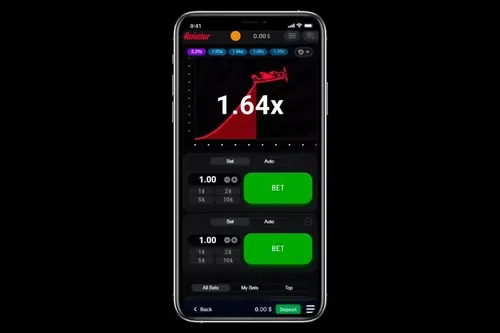
Dual-bet mode enables players to place two simultaneous wagers, offering flexibility in risk management strategies. One bet can target lower multipliers while the other aims for higher returns, balancing potential wins against losses. This feature adds strategic depth to the straightforward crash mechanic.
Operator configurations may adjust the RTP down to 94% or 96%, increasing the house edge beyond the base 3.00%. Higher edges mean faster bankroll erosion for identical betting patterns compared to the 97.00% version. Players should check the specific game settings before committing significant funds.
Session limits worth setting
Certification by iTech Labs and BMM Testlabs confirms that the game meets strict fairness and performance standards. These audits verify the random number generation processes used in each round to ensure unbiased outcomes. Trustworthy certification reduces the risk of encountering rigged software during play.
Time spent playing Aviator accumulates rapidly due to its fast-paced nature, potentially leading to fatigue or poor decisions. Setting a strict time limit prevents excessive exposure to the 3.00% house edge over extended periods. Regular breaks help maintain focus and rational judgment during gameplay.
Financial limits should be established before starting, considering the potential for rapid loss accumulation in crash games. Unlike slots with spin delays, Aviator rounds conclude instantly, allowing many bets within a short timeframe. Controlling session length and stake size mitigates the impact of variance on overall bankroll health.
Why chasing losses fails
Chasing losses involves increasing bet sizes to recover previous deficits, which accelerates bankroll depletion significantly. Each round in Aviator has an independent probability, meaning past outcomes do not influence future crashes. This misconception often leads to unsustainable spending habits among inexperienced players.
The 97.00% RTP represents a long-term average over hundreds of thousands of spins, not a guarantee for individual sessions. Short-term variance can cause substantial swings, making recovery attempts risky and mathematically unsound. Accepting losses as part of the game's design promotes healthier gambling attitudes.
Auto cashout features help enforce discipline by executing trades automatically when predefined thresholds are met. Relying on manual intervention increases the likelihood of emotional decisions during high-stress moments. Utilizing automated tools aligns betting behavior with pre-set financial goals rather than reactive impulses.
Aviator: key facts
| Parameter | Value |
|---|---|
| Game | Aviator |
| Studio | Spribe |
| Released | 2019 |
| RTP | 97.00% |
| House edge | 3.00% |
| Max win | x1,000,000 |
Common systems and their limits
The theoretical return of Aviator stands at 97.00% according to developer Spribe, which establishes a house edge of exactly 3.00%. This percentage represents the long-term average loss rate over hundreds of thousands of rounds rather than a short-session guarantee. Players attempting to overcome this built-in mathematical advantage through common betting patterns will find that no strategy alters the fundamental probability structure.
The maximum win cap for any single round is set at x1,000,000 by the game mechanics designed by Spribe. This limit applies regardless of the stake size or the timing of the cash-out action performed by the player. Consequently, even highly aggressive betting strategies are constrained by this absolute ceiling on potential payouts during gameplay.
Other titles like Plane Game also feature a high volatility rating alongside a 97.00% RTP configured by Spribe. This similarity highlights how crash games generally maintain consistent mathematical frameworks across different studio releases. Comparing these structures reveals that system limitations remain uniform despite variations in visual presentation or theme.
Flat betting explained
Flat betting requires the player to wager the exact same stake amount during every single round of the session. This approach contrasts sharply with progressive methods by maintaining a constant bankroll consumption rate throughout the gameplay duration. The simplicity of this method ensures that variance impacts the total balance in a predictable and linear manner over time.
With an RTP of 97.00%, each unit staked returns 0.97 units on average across a very large sample size. This statistical reality means that flat betting does not generate profit but rather slows the depletion of the initial bankroll. The house edge of 3.00% remains active regardless of whether the multiplier reaches x5 or crashes instantly.
The provably fair mechanism using SHA-256 ensures that each outcome is independent and cannot be influenced by previous results. This independence validates the flat betting approach as it removes the illusion that past losses affect future multipliers. Players relying on this steady input can manage their session length more effectively than those using erratic stakes.
Progressive staking risks
Progressive staking involves raising the stake amount immediately after a loss occurs in an attempt to recover previous deficits quickly. This method does not change the underlying house edge of 3.00% nor does it improve the theoretical return of 97.00%. Instead, it accelerates the rate at which the bankroll is depleted during inevitable losing streaks.
The maximum win potential of x1,000,000 is irrelevant if the player exhausts their funds before reaching a significant multiplier. Progressive strategies often require exponential stake increases that exceed typical table limits or available bankroll resources rapidly. This mathematical reality makes ruin significantly more likely compared to conservative flat betting approaches used by experienced players.
Developer Spribe designs the game with a high volatility profile that amplifies the risk associated with escalating stakes. The random nature of the crash point means that long sequences of low multipliers are statistically probable. Players engaging in progressive methods often face severe financial consequences due to this inherent variance structure.
What the maths actually allows
The certified RTP of 97.00% indicates that for every 100 units wagered, approximately 97 units are returned to players over time. This calculation assumes an infinite number of rounds and ignores short-term fluctuations caused by game volatility. Operators may configure lower rates such as 96% or 94%, which directly increase the house edge beyond the standard 3.00%.
Spribe utilizes a provably fair system combining server seeds and client seeds to generate each unique multiplier value. This cryptographic method ensures transparency and prevents manipulation of the outcome distribution by the casino operator. Players can verify the fairness of each round independently, confirming that the stated RTP holds true mathematically.
The dual-bet mode allows players to place two separate wagers per round, potentially adjusting one for auto cashout. This feature adds strategic depth but does not alter the fundamental mathematical expectations of the game engine. Each bet operates independently against the 97.00% return parameter, requiring careful management of the total bankroll exposure.
Reading variance honestly
High volatility means that wins occur less frequently but tend to be larger when they do happen within the session. This characteristic requires players to maintain a sufficient bankroll to survive periods without any positive multiplier outcomes. The risk of rapid loss is elevated compared to low-variance games that offer steadier but smaller returns.
The release year of 2019 marks the introduction of this specific crash mechanic by Spribe to the online market. Since then, numerous imitations have appeared, yet the original maintains its distinct mathematical signature and certification standards. Understanding this historical context helps players identify genuine implementations versus modified versions with altered RTP values.
Certification by iTech Labs and BMM Testlabs confirms that the actual payout percentages align with the theoretical models. These audits verify that the random number generation process functions correctly and adheres to regulatory requirements for fairness. Such verification provides assurance that the advertised 97.00% RTP is not merely a marketing claim but a verified statistic.
Learning the game in demo first
The developer Spribe released Aviator in 2019 as a crash title without reels, allowing players to practice cashing out before the multiplier ends. This format removes the need to understand paylines or spinning symbols, focusing entirely on timing the exit during the rising flight. New users can test the dual-bet mode safely without risking real funds, gaining familiarity with the interface and auto-cashout settings.
Aviator operates on a theoretical return of 97.00%, which represents the house edge of 3.00% over very long runs. Players should note that operators may configure lower RTP values like 96% or 94%, changing the expected payout significantly. Understanding this variance helps set realistic expectations for session outcomes, ensuring that losses are viewed as part of the mathematical structure rather than personal failure.
Adjusting stakes to your budget
Flat betting involves placing the same stake every round, which prevents rapid bankroll depletion during losing streaks. For instance, a player with a 100 € bankroll might choose a 1 € stake, allowing for one hundred rounds before ruin if no wins occur. This strategy contrasts with progressive staking, where raising stakes after losses only shortens the time to ruin without altering the built-in edge.
The maximum win cap stands at x1,000,000, offering potential for large payouts even with small initial wagers. A 0.50 € bet could theoretically yield 500,000 € if the multiplier reaches the peak before crashing. However, such events are rare, so managing the bankroll requires consistent application of flat betting principles to sustain play over many hours.
Recognising a bad session
A session becomes problematic when the player ignores the provably fair mechanism based on SHA-256 seeds and nonce combinations. Chasing losses by increasing stakes violates responsible gaming principles and accelerates the depletion of the available bankroll. The random nature of the crash point means that consecutive losses are statistically probable and do not indicate a system error or rigged outcome.
Comparing Aviator to Tower Rush by Galaxsys highlights different risk profiles, as the latter offers a max win of only 100x. While Tower Rush provides smaller potential payouts, Aviator’s higher volatility requires stricter discipline to avoid emotional decision-making. Players must recognize that high variance games demand longer sessions to realize the theoretical RTP, making early stop-loss limits essential for protection.
Stopping while ahead
Cashing out before the plane flies away is the core mechanic, but knowing when to stop playing is equally critical. If a player achieves a significant win, such as doubling their initial deposit, they should withdraw profits to secure gains. Continuing to play exposes the bankroll to the inherent 3.00% house edge, which inevitably erodes winnings over time due to the law of large numbers.
The live bet feed shows other players’ actions, creating social pressure to stay engaged even when the session turns unfavorable. Resisting this impulse requires adhering to pre-determined stopping points, whether based on time elapsed or profit targets. By setting these boundaries, players maintain control over their gambling behavior and prevent the common pitfall of giving back winnings to the casino.
Responsible play in practice
Responsible gaming involves treating the activity as entertainment rather than a source of income, especially given the 97.00% theoretical return. Players should never chase losses or use bonus funds like the 300% welcome bonus up to 2,000 € to recover deficits. Such bonuses often come with wagering requirements that make withdrawing profits difficult, further encouraging extended play that contradicts responsible habits.
Certification by iTech Labs and BMM Testlabs ensures that the game mechanics are fair and transparent for all participants. Users can verify fairness using the server seed and client seeds provided through the provably fair system. This transparency allows players to trust the integrity of each round, reducing anxiety and promoting a healthier relationship with the game's random outcomes.
DemoRTP & VolatilityHow to PlayAuto CashoutStrategyBonusesMobileDownload & AppMax WinSimilar GamesReviewFAQSitemap
Aviator 2026