
Play Aviator Now!
Home → Auto Cashout
Aviator Auto Cashout
Auto cashout in Aviator
The auto cashout feature allows the system to close a bet automatically at a chosen multiplier. This parameter removes reaction time from the outcome but does not change the built-in edge of the game. The player defines the threshold before the round begins, ensuring a predetermined exit strategy is executed without manual intervention.
Aviator round parameters
| Max multiplier | x1,000,000 |
| RTP | 97.00% |
| Bet range | 0.10 EUR / USD / GBP (varies by operator) - 100 EUR / USD / GBP (varies by operator) |
Spribe designed this crash game to operate with a theoretical return of 97.00% over a very long run. While the house edge remains fixed at 3.00%, automation helps players adhere to their bankroll limits more strictly. The mechanism functions independently of the multiplayer live bet feed or the dual-bet mode available in the interface.
This tool does not guarantee profit because the plane can fly away before reaching the set target. A failed auto cashout results in the loss of the stake for that specific round. Players must understand that the algorithm relies on SHA-256 combining a server seed and multiple client seeds plus a nonce.
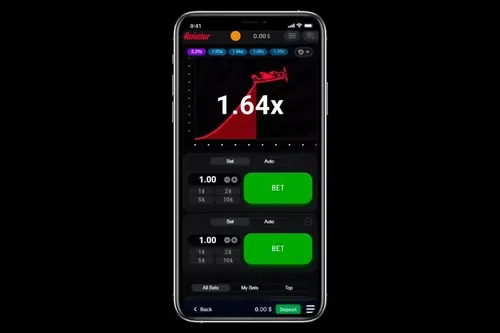
Setting a target multiplier
A target multiplier determines the exact point at which winnings are secured during a rising sequence. Unlike Dice which offers adjustable volatility, Aviator presents a continuous curve where timing is the only variable. The maximum potential win is capped at x1,000,000, requiring extreme patience and high-risk strategies to approach.
Setting a low target, such as x1.10, yields frequent small wins but exposes the account to cumulative losses. Conversely, aiming for x100.00 or higher drastically reduces hit frequency while increasing variance per session. The player must balance these two extremes against their total deposit and risk tolerance levels.
The theoretical RTP of 97.00% applies only over hundreds of thousands of rounds, not single sessions. Short-term deviations from this average are statistically inevitable when chasing high multipliers. Operators may configure lower RTP versions, meaning the actual return could be 96.00% or even 94.00% depending on the platform.
Why automation removes hesitation
Human hesitation often leads to missed exits when the multiplier rises rapidly toward critical thresholds. The automated system executes the cashout instantly once the predefined number is reached, eliminating emotional delays. This precision ensures that the calculated value is converted into real balance without user error.
Certified by iTech Labs and BMM Testlabs, the provably fair algorithm ensures transparency in every round. Manual play introduces psychological bias, whereas setting a strict limit enforces disciplined betting behavior. The dual-bet mode allows one hand to chase high multipliers while the other secures steady gains.
Removing hesitation prevents the common mistake of holding onto a winning ticket too long. A delay of even one second can result in the plane flying away and losing the entire stake. This feature is essential for managing the 3.00% house edge effectively over extended playing periods.
Low targets versus high targets
Low target strategies involve setting multipliers between x1.01 and x2.00 to achieve consistent, albeit small, returns. These frequent payouts help maintain bankroll stability during volatile market conditions within the game. However, the cumulative effect of minor losses can still erode the initial deposit over time.
High target approaches require waiting for multipliers to reach x50.00 or x100.00 before cashing out. This method aligns with the pursuit of the maximum win cap of x1,000,000 but demands significant patience. Most rounds will crash well before reaching these heights, leading to a higher rate of lost stakes.
Comparing this to Dice shows a different risk profile, as Dice allows adjustable volatility settings. Aviator lacks this adjustment, forcing players to choose their risk level solely through target selection. The constant 97.00% RTP means both strategies face the same mathematical disadvantage in the long run.
Auto bet alongside auto cashout
Combining auto bet with auto cashout creates a fully autonomous loop for executing wagering sequences. The system places the next bet immediately after the previous round concludes, maintaining continuous engagement. This setup is particularly useful for players wishing to test specific multiplier strategies without active monitoring.
The 300% welcome bonus up to €2,000 plus 100 free spins may impose wagering requirements on auto-played funds. Players must verify if contributions from crash games count toward clearing these bonus terms. Failure to meet conditions can result in the forfeiture of winnings generated through automated sequences.
Using both features simultaneously increases the volume of rounds processed per hour significantly. Each round operates independently via SHA-256, ensuring no memory effects influence future outcomes. The provably fair certification guarantees that neither the speed nor the automation alters the underlying odds.
Aviator: key facts
| Parameter | Value |
|---|---|
| Game | Aviator |
| Studio | Spribe |
| Released | 2019 |
| RTP | 97.00% |
| House edge | 3.00% |
| Max win | x1,000,000 |
Choosing a cashout target
The maximum win potential in Aviator is capped at x1,000,000, which represents the highest possible multiplier a player can achieve before the plane flies away. This extreme ceiling requires operators to configure specific risk parameters that influence how frequently such high multipliers actually appear during live sessions. Players must understand that targeting this upper limit involves significant variance compared to safer, lower multipliers available in the same round.
The theoretical return to player for Spribe's title stands at 97.00%, indicating a house edge of exactly 3.00% over a very long run. Operators may sometimes configure lower RTP settings like 96% or even 94%, which directly reduces the expected payout for every unit wagered. Understanding these variations helps players select platforms where the mathematical advantage remains closest to the standard 97.00% figure published by the developer.
Avoiding low multipliers preserves bankroll stability when comparing against other crash games like Plane Game, which also features a 97.00% RTP but different volatility profiles. Setting an auto cashout at x2.00 ensures consistent small wins that offset losses from rounds where the crash occurs prematurely. This strategy aligns with the game's provably fair mechanism while managing the inherent risk of the rising multiplier mechanic.
Frequency against payout size
Spribe designed Aviator as a crash game without reels or paylines, meaning the frequency of wins depends entirely on when the player decides to cash out before the end. The dual-bet mode allows users to place two simultaneous wagers, enabling one bet to secure early profits while the second chases higher multipliers up to x1,000,000. This structure creates a dynamic balance between frequent small payouts and rare large wins within each single round of play.
The certified iTech Labs audit confirms the integrity of the SHA-256 algorithm used to generate server seeds combined with client seeds and a nonce. These technical safeguards ensure that the multiplier rise and subsequent crash point are determined randomly rather than manipulated by the casino operator. Consequently, the frequency of crashes at any given multiplier level remains statistically consistent across millions of rounds played by users worldwide.
Comparing this frequency model to traditional slots reveals that Aviator offers instant results without the delay of spinning reels or waiting for symbol combinations. The absence of paylines means every round has only one outcome: either the player cashes out successfully or loses their stake when the plane departs. This simplicity allows for faster decision-making and clearer tracking of win rates against the stated 97.00% theoretical return rate.
Testing targets in demo
The demo version of Aviator allows players to practice cashing out at various multipliers without risking real funds, helping them identify comfortable exit points. Since the game uses a provably fair system based on SHA-256 hashes, the randomness in demo mode mirrors the real money experience exactly. This equivalence enables users to test strategies involving auto cashout features at different thresholds like x1.50 or x5.00 safely.
Using the dual-bet feature in free play demonstrates how splitting stakes can mitigate the impact of a sudden crash at low multipliers. One bet might automatically cash out at x2.00 to cover the cost of both bets, while the second remains open for potential growth toward x1,000,000. This technique illustrates the strategic depth available beyond simple manual timing, which is crucial for managing volatility effectively.
Unlike Plane Game which shares the same 97.00% RTP but may exhibit different hit frequencies due to its own volatility settings, Aviator's multiplier curve is unique. Observing how often the plane flies away below x2.00 in demo mode provides insight into the practical application of the 3.00% house edge. Such data collection helps players adjust their expectations regarding how frequently they should expect to see winning rounds in actual gameplay.
Adjusting after a losing streak
After experiencing consecutive losses, increasing the bet size to chase the x1,000,000 max win cap often leads to rapid bankroll depletion rather than recovery. The 97.00% RTP indicates that short-term variance will naturally produce losing streaks regardless of the chosen cashout target or betting pattern. Maintaining a flat bet size prevents emotional decisions that contradict the mathematical reality of the 3.00% house edge built into every round.
The auto cashout function serves as a critical tool for enforcing discipline during volatile periods by removing reaction time from the decision-making process. Setting this feature to trigger at a moderate multiplier like x3.00 ensures that some profits are secured even if the plane crashes shortly after takeoff. This automated approach stabilizes outcomes compared to manual cashouts, which are susceptible to hesitation or greed during fast-paced rounds.
Contrasting Aviator's crash mechanics with slots highlights that losing streaks here result from premature crashes rather than missing symbol combinations on paylines. The BMM Testlabs certification guarantees that these crashes occur independently of previous round outcomes, making past losses irrelevant to future probabilities. Accepting this independence allows players to reset their strategy without falling prey to the gambler's fallacy or attempting to predict random events.
When to turn automation off
Turning off auto cashout introduces manual timing risks that can significantly reduce the effective return below the advertised 97.00% RTP if hesitation causes missed exits. The SHA-256 provably fair system ensures fairness, but human reaction times vary, creating inconsistency in how often players successfully cash out before the crash. Relying on automation eliminates this variable, ensuring that every bet adheres strictly to the pre-determined multiplier threshold set by the user.
With a maximum win cap of x1,000,000, the potential reward for holding a bet longer increases, but so does the probability of total loss as the multiplier rises. Spribe's design encourages strategic use of dual bets, where one bet remains automated for safety while the other is manually controlled for higher gains. This hybrid approach balances the security of automated exits with the excitement of manual intervention, optimizing the overall gaming experience.
Unlike Plane Game, which may offer different volatility characteristics despite sharing the same 97.00% RTP, Aviator's continuous multiplier ascent demands precise execution. Disabling automation requires intense focus and quick reflexes, which can be difficult to maintain during extended sessions or when fatigue sets in. Players should recognize that manual control sacrifices the statistical consistency provided by auto cashout features in exchange for perceived greater agency over the outcome.
Double bet setups
The Aviator game by Spribe enables a dual-bet mode that allows players to place two separate wagers within a single round. This configuration requires the player to manage two distinct cash-out points simultaneously, effectively doubling the operational complexity of each session. The theoretical return for this mechanic remains at 97.00%, provided the player executes both decisions with precision and discipline under pressure.
This setup utilizes the auto cashout feature to automate one wager, removing reaction time from the outcome while maintaining the built-in house edge. Players can set specific multiplier targets for each bet, ensuring that at least one position is secured before the plane flies away during the crash phase. Such automation does not alter the mathematical advantage held by the operator, regardless of how carefully the parameters are configured by the user.
Comparing this approach to Tower Rush by Galaxsys reveals different risk profiles, as the latter caps its maximum win at just 100x compared to Aviator's x1,000,000 potential. While Tower Rush offers an RTP of 97.00%, its lower ceiling limits the upside for aggressive double-bet strategies that rely on high-multiplier crashes. Aviator's higher cap allows for significant payouts even when one of the two bets fails to cash out in time.
Splitting stakes across two bets
Aviator's dual-bet interface permits splitting a total bankroll into two independent wagers, each operating with its own multiplier target and cash-out timing. This strategy distributes risk across the rising curve, allowing one stake to secure small profits while the other chases higher multipliers before the crash occurs. The provably fair SHA-256 algorithm ensures that neither bet is influenced by server seeds or client nonce combinations during the flight phase.
The maximum win potential of x1,000,000 applies to the highest multiplier reached by any single successful cash-out, regardless of how many bets were placed in the round. Splitting stakes does not increase the overall theoretical return of 97.00%, but it changes the variance profile by reducing the impact of a single missed cash-out. Operators may configure lower RTPs like 96% or 94%, which directly reduces the expected value of each split wager over the long term.
In contrast to Tower Rush, which limits wins to 100x, Aviator's structure allows for massive asymmetry between the two bets without capping the upside. The 97.00% RTP for Aviator stands in stark opposition to the capped nature of some other crash games, offering greater reward potential for high-risk splits. This flexibility makes the dual-bet mode particularly attractive for players seeking to balance safety with the chance of hitting the million-x multiplier.
Combining a safe and a risky target
A common strategy involves pairing a low multiplier cash-out with a high-risk second bet, leveraging the auto cashout feature to secure the first stake automatically. This method relies on the continuous rise of the multiplier, where the safe bet covers losses while the risky bet aims for substantial gains before the crash. The house edge of 3.00% remains constant, meaning the combined expected value cannot exceed the 97.00% theoretical return over hundreds of thousands of rounds.
The certified audits by iTech Labs and BMM Testlabs confirm that the crash point is determined by a random server seed mixed with client seeds and a nonce. This mechanism ensures that no pattern exists in the crash point, making the combination of safe and risky targets a matter of probability management rather than prediction. Players must accept that the plane will eventually fly away, ending the round and settling all outstanding bets regardless of their target settings.
Tower Rush by Galaxsys offers a different dynamic with its 100x max win cap, which restricts the upside of any risky target combination compared to Aviator's x1,000,000 limit. While both games share a 97.00% RTP, the volatility differs significantly due to Aviator's uncapped potential, rewarding high-risk bets more generously. This distinction is crucial for players choosing between games, as the max win cap directly influences the effectiveness of aggressive betting strategies.
Limits of any automated plan
The auto cashout function in Aviator closes a bet automatically at a chosen multiplier, but it does not guarantee profit because the crash can occur below that threshold. This feature removes reaction time from the outcome, yet the built-in 3.00% house edge persists regardless of how precise the automated settings are configured by the user. Over a very long run, the 97.00% RTP ensures that the operator retains its mathematical advantage, limiting the success of any purely automated strategy.
Spribe's implementation uses a provably fair system based on SHA-256, combining a server seed with multiple client seeds and a nonce to determine the crash point. This transparency prevents manipulation but also means that no automation can predict the exact moment the plane flies away, rendering predictive algorithms ineffective. The certified audits by iTech Labs and BMM Testlabs verify this randomness, ensuring that every round is independent and unaffected by previous outcomes.
While Tower Rush by Galaxsys shares a 97.00% RTP, its 100x max win cap imposes a hard limit on the rewards available to automated plans. Aviator's x1,000,000 maximum win allows for larger payouts, but the uncertainty of the crash point remains a fundamental constraint for any automated approach. Players must recognize that automation manages execution speed, not the underlying probability distribution defined by the game's mathematical model.
What automation cannot fix
No amount of automation can overcome the 3.00% house edge inherent in Aviator, which is derived from its 97.00% theoretical return over a very long run. The auto cashout feature merely executes pre-set instructions, leaving the player exposed to the same mathematical disadvantage as manual play without the benefit of real-time adjustments. This limitation holds true regardless of whether the operator configures the standard RTP or a lower variant like 96% or 94%.
The crash point in Aviator is determined by a random sequence generated via SHA-256, involving a server seed, client seeds, and a nonce to ensure fairness. This process guarantees that no pattern can be exploited by automated systems, as each round is statistically independent and unpredictable. Certified by iTech Labs and BMM Testlabs, the game's integrity is maintained, preventing any software from gaining an unfair advantage over the house.
Unlike Tower Rush by Galaxsys, which caps its maximum win at 100x, Aviator's x1,000,000 potential does not change the fundamental reality that automation cannot alter the odds. Both games offer a 97.00% RTP, but the higher cap in Aviator simply provides a larger prize pool rather than better winning probabilities. Players must understand that while automation speeds up play, it does not improve the expected value or mitigate the long-term impact of the house edge.
DemoRTP & VolatilityHow to PlayAuto CashoutStrategyBonusesMobileDownload & AppMax WinSimilar GamesReviewFAQSitemap
Aviator 2026